

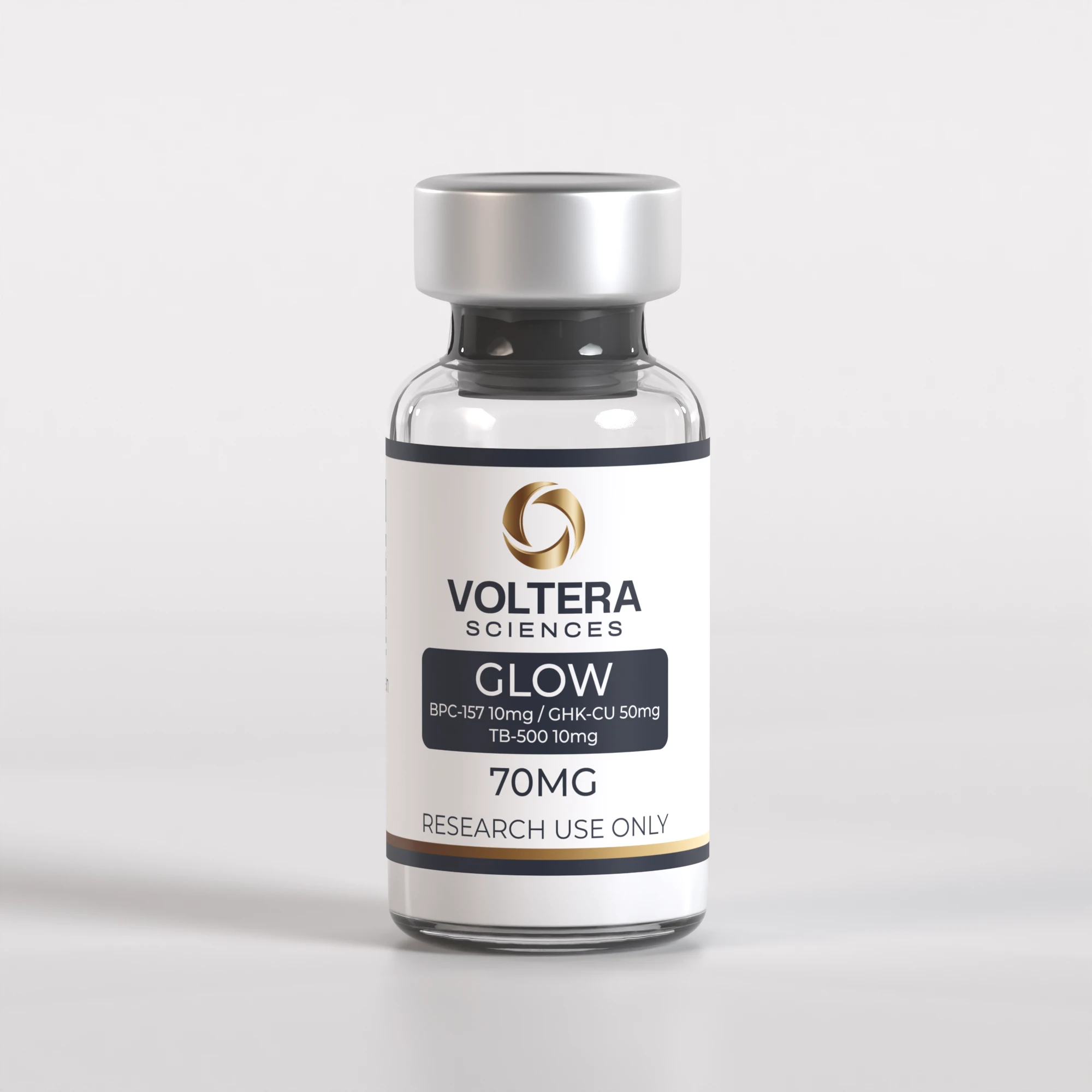
GLOW 70MG
Disclaimer: For research purposes only. Not for human or animal use and not FDA-approved. By purchasing, you confirm that you are 21 years of age or older and are a qualified researcher.
$89.99
| Discount | Quantity | Per Unit Price |
|---|---|---|
| 10% off | 3 - 5 | 10% $80.99 |
| 15% off | 6 - 9 | 15% $76.49 |
| 20% off | 10 + | 20% $71.99 |
| Discount | Quantity | Per Unit Price |
|---|---|---|
| 10% off | 3 - 5 | 10% $80.99 |
| 15% off | 6 - 9 | 15% $76.49 |
| 20% off | 10 + | 20% $71.99 |
RESEARCH USE ONLY
This product is for R&D purposes only and is not approved for human or veterinary use.
Orders placed Monday-Friday will be shipped the next business day (Excludes Holidays)
Trusted third-party testing ensures each batch’s purity and compliance with regulations.
Cold-chain handling
Stored and shipped to protect stability.
Secure ordering
Encrypted checkout and discreet packaging.
Consistent supply
Restocked regularly to avoid delays.
Quality assured
Every batch tested for purity.
Fast processing
Same-day shipping on orders before 2pm.
Lab certified
Third-party verified results.
Research-Use-Only Peptides: BPC-157 10MG + GHK-CU 50MG + TB-500 10MG & 70MG
This product is designed for research purposes only and contains a combination of biologically active peptides. BPC-157, GHK-Copper, and TB-500 are non-pathogenic, naturally occurring sequences derived from biological sources. These peptides have been studied in various preclinical models for their potential effects on tissue repair, regenerative processes, and cellular functions. This combination aims to support exploration in scientific and academic settings.
Research Context
Peptides, particularly those derived from endogenous biological sources, have emerged as a promising area of study in biomedical research. These molecules are short chains of amino acids that can modulate cellular and physiological responses. Research involving peptides often focuses on understanding their biochemical interactions, mechanisms of action, and potential applications in regenerative medicine, wound healing, and other fields. The peptides presented in this product are non-toxic and are commonly used in experimental settings to study biological processes.
Research Overview
Preclinical studies have investigated the effects of peptides like BPC-157, GHK-Copper, and TB-500 in various biological systems. BPC-157 is a synthetic version of a peptide originally found in bovine colostrum and has shown potential in promoting tissue repair and reducing inflammation in animal models. GHK-Copper, a copper-containing peptide, is known for its role in extracellular matrix remodeling and wound healing. TB-500, another synthetic peptide, has been examined for its impact on cellular proliferation, migration, and extracellular matrix production. Together, these peptides may offer insights into mechanisms of tissue regeneration and repair under controlled research conditions.
Key Research Focus Areas
- Tissue Regeneration: BPC-157 and TB-500 have been studied for their roles in accelerating wound healing and repairing damaged tissues, including those in the gastrointestinal and musculoskeletal systems.
- Extracellular Matrix Remodeling: GHK-Copper is well-documented for its involvement in extracellular matrix synthesis and remodeling, potentially influencing healing processes.
- Biochemical Signaling: Research has explored how these peptides interact with cellular receptors and signaling pathways, contributing to processes such as inflammation modulation and cellular repair mechanisms.
- Experimental Models: These peptides are often used in animal studies to evaluate their effects on healing, regeneration, and overall physiological functions in a controlled scientific environment.
Important Safety and Compliance Information
It is crucial to note that the administration of peptides in research settings requires strict adherence to ethical guidelines, safety protocols, and regulatory standards. Any research involving these compounds must be conducted by qualified personnel in accredited laboratories with appropriate safety measures. This product is intended solely for academic and scientific exploration and should not be used for therapeutic, diagnostic, or cosmetic purposes. Users are responsible for ensuring compliance with all applicable laws, regulations, and institutional policies.
| Peptide | Source | Potential Research Applications |
|---|---|---|
| BPC-157 | Synthetic (derived from bovine colostrum) | Wound healing, tissue repair, reduction of inflammation |
| GHK-Copper | Synthetic (copper-containing peptide) | Extracellular matrix remodeling, skin healing, tissue regeneration |
| TB-500 | Synthetic (thymosin beta-4) | Cellular proliferation, wound healing, extracellular matrix production |
For research use only. Not for human or animal consumption. Always consult with a qualified research advisor or regulatory authority before conducting any research involving these materials.
Related Products
Related products
-
BPC-157 10MG
$45.99 -
KLOW 80MG
$109.99 -
AOD-9604 5MG
$52.99This product has multiple variants. The options may be chosen on the product page -
5-Amino-1MQ 10MG
$52.99