

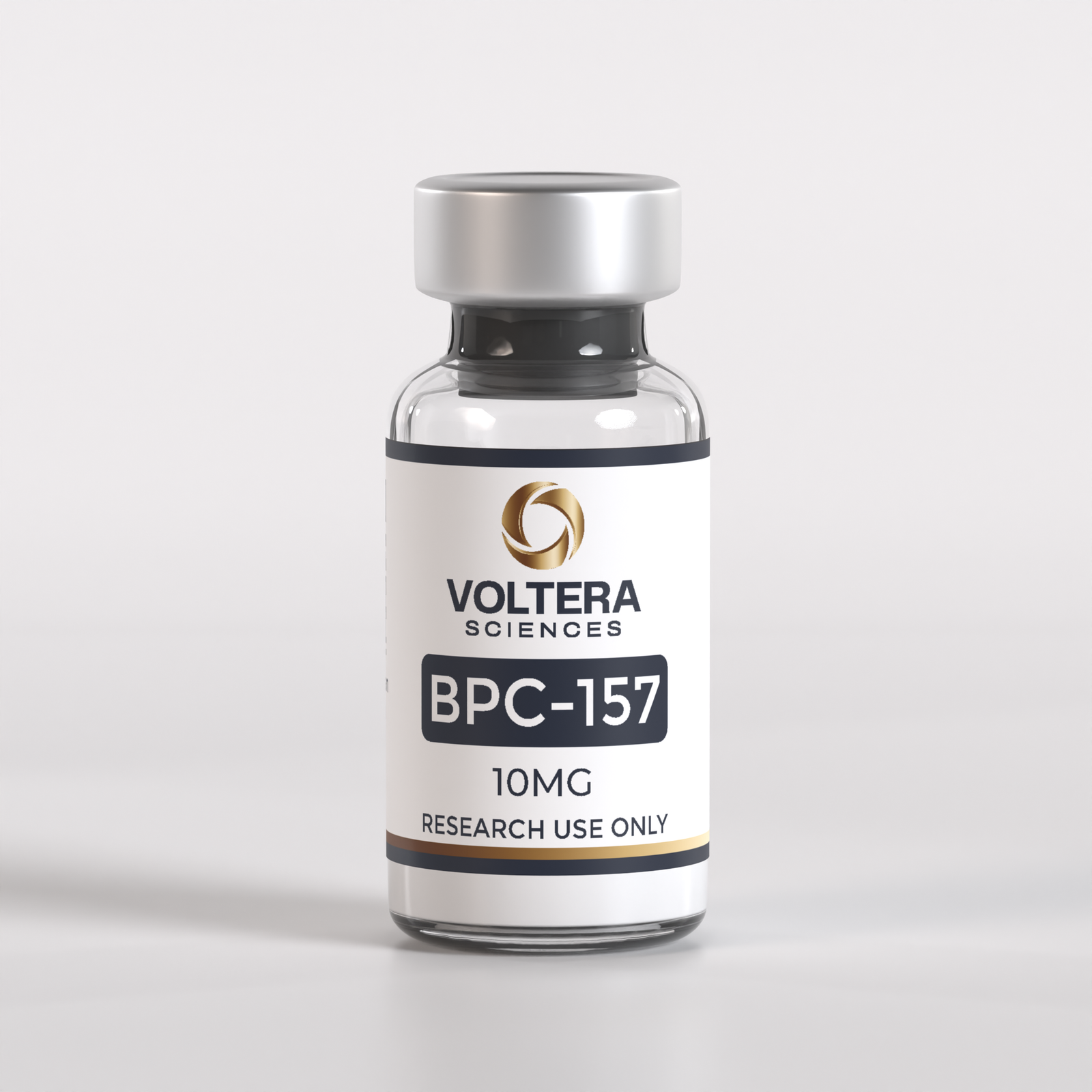
BPC-157 10MG
Disclaimer: For research purposes only. Not for human or animal use and not FDA-approved. By purchasing, you confirm that you are 21 years of age or older and are a qualified researcher.
$45.99
| Discount | Quantity | Per Unit Price |
|---|---|---|
| 10% off | 3 - 5 | 10% $41.39 |
| 15% off | 6 - 9 | 15% $39.09 |
| 20% off | 10 + | 20% $36.79 |
| Discount | Quantity | Per Unit Price |
|---|---|---|
| 10% off | 3 - 5 | 10% $41.39 |
| 15% off | 6 - 9 | 15% $39.09 |
| 20% off | 10 + | 20% $36.79 |
RESEARCH USE ONLY
This product is for R&D purposes only and is not approved for human or veterinary use.
Orders placed Monday-Friday will be shipped the next business day (Excludes Holidays)
Trusted third-party testing ensures each batch’s purity and compliance with regulations.
Cold-chain handling
Stored and shipped to protect stability.
Secure ordering
Encrypted checkout and discreet packaging.
Consistent supply
Restocked regularly to avoid delays.
Quality assured
Every batch tested for purity.
Fast processing
Same-day shipping on orders before 2pm.
Lab certified
Third-party verified results.
BPC-157 10MG
BPC-157 is a synthetic peptide developed for academic and industrial research applications. Commonly investigated in preclinical settings, this peptide is utilized in studies examining tissue-response signaling, cellular repair mechanisms, and musculoskeletal physiology. Due to its interaction with pathways associated with regenerative biology and biochemical adaptation, BPC-157 remains a valuable compound in controlled laboratory research environments.
Research Context
BPC-157 was originally studied for its potential involvement in gastric peptide signaling and tissue-related biological pathways. Over time, research expanded into areas involving connective tissue physiology, vascular activity, and cellular migration mechanisms. Its broad interaction with regenerative signaling pathways has made it an important focus in experimental models examining recovery-associated biological processes and physiological adaptation.
Research Overview
BPC-157 is primarily employed in preclinical and laboratory-based studies investigating connective tissue biology, cellular communication pathways, and inflammatory response mechanisms. Research models frequently evaluate its role in tendon and ligament studies, vascular signaling, oxidative stress adaptation, and tissue-response coordination under controlled conditions. Ongoing investigations continue to assess its potential relevance in musculoskeletal
and gastrointestinal research applications.
Key Research Focus Areas
- Tissue Response Signaling:
BPC-157 is widely studied for its potential role in pathways associated with tissue coordination, cellular communication, and regenerative biological activity. - Musculoskeletal Physiology:
Preclinical investigations examine its interaction with tendon, ligament, connective tissue, and muscle-related biochemical pathways. - Vascular and Cellular Activity:
Research explores signaling mechanisms associated with vascular response, angiogenesis-related activity, and cellular adaptation processes. - Inflammatory and Oxidative Stress Research:
Studies evaluate its possible influence on inflammatory mediators, oxidative balance, and biochemical stress-response pathways. - Comparative Regenerative Research:
Experimental models compare BPC-157 with other research peptides to analyze signaling behavior, tissue-response patterns, and laboratory consistency.
Important Compliance and Safety Remarks
This peptide is intended solely for use in academic, institutional, or industrial research environments. The following warnings apply:
- No claims regarding therapeutic efficacy, human or animal safety, or cosmetic utility are made.
- Researchers must adhere to institutional review board (IRB) and regulatory guidelines for peptide handling and testing protocols.
- All experimental procedures should be conducted under sterile, controlled conditions to ensure reproducibility and ethical compliance.
Due to its biological activity, BPC-157 should be handled using appropriate containment procedures and laboratory safety standards. Proper storage, documentation, and handling practices must be maintained at all times.
For research use only. Not for human or animal consumption.
Related Products
Related products
-
Selank 10MG
$42.99 -
VLS-2TRZ (GLP-2)
$60.99 – $159.99Price range: $60.99 through $159.99This product has multiple variants. The options may be chosen on the product page -
NAD+
$59.99 – $92.99Price range: $59.99 through $92.99This product has multiple variants. The options may be chosen on the product page -
GHK-CU
$42.99 – $60.99Price range: $42.99 through $60.99This product has multiple variants. The options may be chosen on the product page