

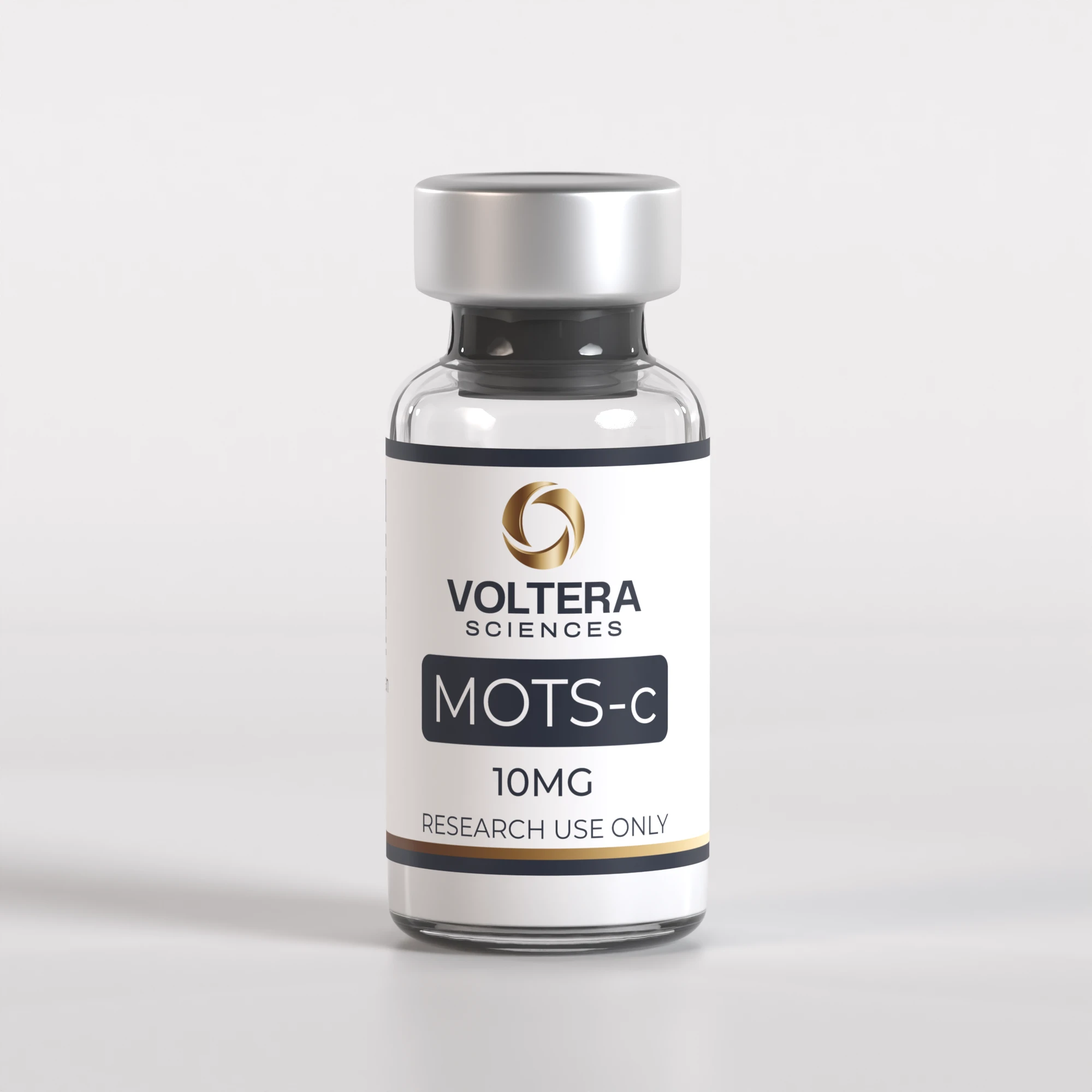
MOTS-c
Disclaimer: For research purposes only. Not for human or animal use and not FDA-approved. By purchasing, you confirm that you are 21 years of age or older and are a qualified researcher.
$47.99 – $99.99Price range: $47.99 through $99.99
| Discount | Quantity | Per Unit Price |
|---|---|---|
| 10% off | 3 - 5 | 10% $43.19 |
| 15% off | 6 - 9 | 15% $40.79 |
| 20% off | 10 + | 20% $38.39 |
| Discount | Quantity | Per Unit Price |
|---|---|---|
| 10% off | 3 - 5 | 10% $43.19 |
| 15% off | 6 - 9 | 15% $40.79 |
| 20% off | 10 + | 20% $38.39 |
RESEARCH USE ONLY
This product is for R&D purposes only and is not approved for human or veterinary use.
Orders placed Monday-Friday will be shipped the next business day (Excludes Holidays)
Trusted third-party testing ensures each batch’s purity and compliance with regulations.
Cold-chain handling
Stored and shipped to protect stability.
Secure ordering
Encrypted checkout and discreet packaging.
Consistent supply
Restocked regularly to avoid delays.
Quality assured
Every batch tested for purity.
Fast processing
Same-day shipping on orders before 2pm.
Lab certified
Third-party verified results.
MOTS-c
MOTS-c (Mitochondrial Transcribed Open Reading Frame Small C) is a peptide derived from mitochondrial RNA transcripts, primarily identified in mammalian tissues. This research-use-only compound has emerged as a subject of interest in the fields of mitochondrial biology, bioenergetics, and potential translational research.
Research into MOTS-c has gained traction due to its potential implications in studying mitochondrial function, aging, and metabolic regulation. The peptide has been suggested to possess properties that could impact cellular energy production and mitochondrial integrity, although its exact mechanisms and full biological roles remain under investigation.
Research Overview
MOTS-c was first identified in the mitochondria of mice and later in human cells. Its discovery sparked interest in exploring its role in mitochondrial biology, given its sequence similarity to mitochondrial-targeting peptides and its ability to translocate into mitochondria upon expression. Early studies have focused on its potential influence on mitochondrial respiration, bioenergetics, and cellular stress responses.
Key Research Focus Areas
- Mitochondrial Function and Bioenergetics:
Research has examined how MOTS-c may modulate mitochondrial respiration, ATP production, and overall cellular energy efficiency. Its presence in mitochondria suggests a potential role in maintaining mitochondrial health and function under various physiological conditions. - Age-Related Mitochondrial Decline:
Investigations into aging processes have highlighted mitochondrial dysfunction as a contributing factor. Studies are exploring whether MOTS-c could influence mitochondrial dynamics and resilience, potentially offering insights into age-related decline or interventions. - Metabolic Regulation and Energy Balance:
Preliminary findings have suggested a possible impact of MOTS-c on metabolic pathways, including glucose and lipid metabolism. Research in this area aims to determine its role in energy homeostasis and its potential as a target for metabolic disease interventions. - Cellular Stress Responses and Oxidative Damage:
The peptide has been studied for its ability to interact with mitochondrial stress pathways, including those involving reactive oxygen species (ROS). Its potential protective effects against oxidative damage and mitochondrial dysfunction remain a topic of ongoing investigation. - Translational and Therapeutic Implications:
While direct therapeutic applications are not yet established, MOTS-c holds promise as a tool for exploring mitochondrial-targeted interventions. Its study may contribute to broader efforts in developing treatments for mitochondrial disorders, neurodegenerative diseases, and age-related conditions.
It is important to note that the biological effects of MOTS-c are not yet fully characterized, and its potential applications remain speculative based on preliminary research. Further in vitro, in vivo, and clinical studies are required to elucidate its precise mechanisms and potential therapeutic utility.
For research use only. Not for human or animal consumption.
Related Products
Related products
-
BPC-157 10MG
$45.99 -
BPC-157 + TB-500
$52.99 – $79.00Price range: $52.99 through $79.00This product has multiple variants. The options may be chosen on the product page -
SS-31
$49.99This product has multiple variants. The options may be chosen on the product page -
GHK-CU
$42.99 – $60.99Price range: $42.99 through $60.99This product has multiple variants. The options may be chosen on the product page